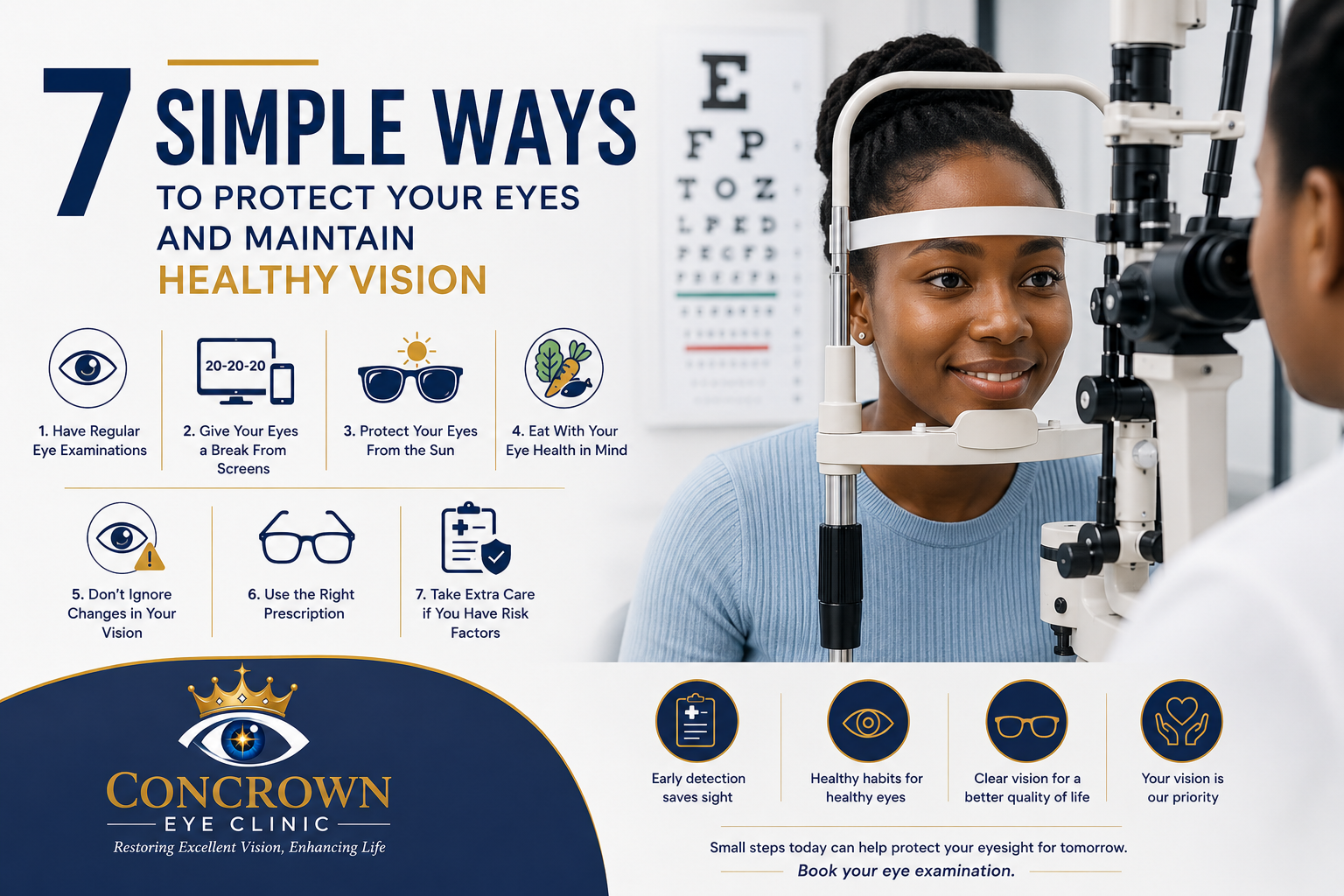
7 Simple Ways to Protect Your Eyes and Maintain Healthy Vision
Good eyesight plays an important role in almost everything we do, from working and reading to driving and enjoying time with family. Yet eye health is something many people only think about when their vision begins to change.
Taking a few simple precautions can help protect your eyes and identify potential problems before they become more serious.
1. Have Regular Eye Examinations
An eye examination is about more than finding out whether you need glasses.
A comprehensive eye examination can help your eye-care professional assess your vision and look for signs of conditions such as glaucoma, cataracts and other eye diseases.
Some eye conditions can develop gradually without obvious symptoms, which makes routine examinations particularly important.
2. Give Your Eyes a Break From Screens
Phones, computers and tablets have become part of everyday life, and spending long periods looking at screens can contribute to eye strain, dryness and discomfort.
Try the 20-20-20 rule: every 20 minutes, look at something approximately 20 feet away for at least 20 seconds.
Remembering to blink regularly and positioning your screen at a comfortable distance can also help.
3. Protect Your Eyes From the Sun
Your eyes need protection from ultraviolet (UV) radiation just like your skin.
When spending time outdoors, choose sunglasses that provide appropriate UVA and UVB protection. A wide-brimmed hat can provide additional protection when the sun is particularly strong.
Quality sunglasses aren't only a fashion accessory—they can be an important part of protecting your long-term eye health.
4. Eat With Your Eye Health in Mind
A balanced diet provides nutrients that support healthy eyes.
Include plenty of colourful fruits and vegetables, particularly leafy green vegetables. Foods containing vitamins A, C and E, zinc and omega-3 fatty acids can form part of a balanced diet that supports general and eye health.
And don't forget hydration. Drinking enough water can help support normal tear production and reduce symptoms associated with dry eyes.
5. Don't Ignore Changes in Your Vision
Blurred vision, persistent eye pain, unusual redness, flashes of light, new floaters or sudden changes in vision should not simply be ignored.
Some symptoms may have relatively minor causes, but others can require prompt assessment.
A sudden loss or major change in vision is an emergency and should receive urgent medical attention.
6. Use the Right Prescription
Wearing glasses with an outdated prescription can make everyday activities unnecessarily difficult and may contribute to headaches or eye strain.
Your vision can change over time, so periodic eye examinations help ensure that your glasses or contact lenses continue to meet your needs.
The right eyewear can also combine clear vision with comfort and personal style.
7. Take Extra Care if You Have Risk Factors
Certain health conditions and family histories can increase the importance of regular eye monitoring.
For example, people living with diabetes should pay particular attention to their eye health because diabetes can affect the blood vessels within the eye.
Tell your eye-care professional about relevant medical conditions, medications and any family history of significant eye disease.
Make Your Vision a Priority
Healthy vision contributes enormously to quality of life. Regular eye examinations, good daily habits and early attention to unusual symptoms can all help protect your sight.
At Concrown Eye Clinic, our goal is to provide professional, patient-centred eye care—from routine eye examinations and vision correction to personalised eyewear and ongoing eye-health support.
Restoring Excellent Vision, Enhancing Life.